
AI Can't Optimize a Dental Practice It Doesn't Understand
The interesting part was how AI could retrieve information from several different sources, connect the relevant details, and explain where its answers came from.
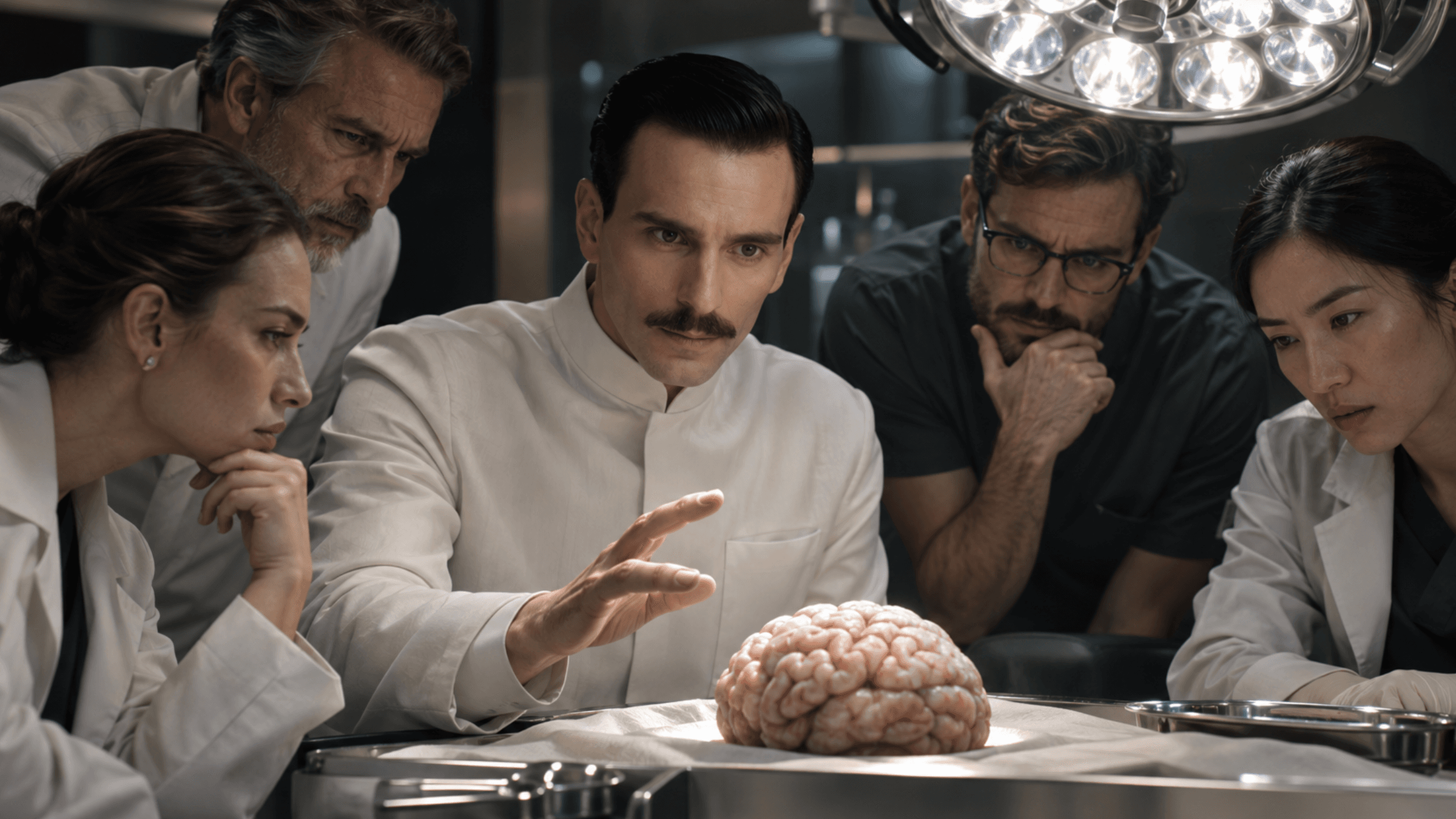
Every dental practice operates differently.
One might specialize in full-arch dental implants. Another might focus primarily on general dentistry and hygiene. Some have multiple providers, while others rely on a single dentist. Their patient populations, staffing models, financial goals, and operating expenses can vary considerably.
Yet we're increasingly being told that AI can help manage and optimize all of these businesses.
That sounds promising, but one fundamental question remains.
How much does AI actually know about the dental practice it's supposed to help?
I recently watched an interesting conversation on Group Dentistry Now, where Bill Neumann spoke with Gary Salman, CEO and co-founder of Black Talon Security, and Matthew McGaw of DSO Compass.
During the conversation, Gary discussed how enterprise AI is evolving to understand an organization's internal documents, policies, contracts, and procedures.
The interesting part was how AI could retrieve information from several different sources, connect the relevant details, and explain where its answers came from.
It got me thinking about a much larger opportunity for AI in dentistry.
We're starting to move toward systems that understand individual businesses, their operations, and the circumstances influencing their performance.
And I think that will be one of the most important developments in enterprise AI over the next several years.
Generic AI Has a Context Problem
Anyone who has used ChatGPT, Claude, or Gemini knows how useful these tools can be.
You can ask questions, analyze documents, brainstorm ideas, write code, and research virtually any subject.
They're remarkably capable and keep improving.
But a limitation emerges when you apply general-purpose AI to specific business operations.
The model doesn't automatically know your business.
It might understand how dental practices generally operate. It can explain production, collections, hygiene reappointments, case acceptance, and other dental KPIs.
It can even suggest ways to improve performance based on industry knowledge.
But it doesn't know what happened inside your practice last Tuesday.
It doesn't know that one of your hygienists recently resigned, that your office manager is new, or that you recently changed marketing agencies.
It doesn't know whether your practice is trying to increase new patient volume, reduce operating costs, or improve treatment completion.
And without access to your actual performance data, it can't reliably identify which operational issues deserve your attention.
That limits how useful its recommendations can be.
Imagine asking a generic AI assistant why your dental practice's production declined last month.
You'll probably get a reasonable explanation of the most common causes.
But those explanations could apply to thousands of different practices.
You still have to figure out which ones apply to yours.
Understanding the Business Changes the Conversation
Now imagine asking the same question with an AI system connected to your practice management software.
"Why did my production decline 12% last month?"
The system could examine your adjusted production, new patient volume, appointment history, hygiene performance, and completed procedures.
It might discover that new patient volume stayed relatively consistent, but total completed appointments declined.
Or perhaps the number of appointments remained stable while production per patient decreased.
Those are two very different situations.
Now imagine the system also had access to relevant staffing information.
It could recognize that a hygienist left halfway through the month, reducing available hygiene days.
With access to scheduling history, it could investigate whether appointment cancellations increased or whether fewer provider days were available.
If marketing information were connected, it could examine whether a change in advertising strategy coincided with a decline in patient volume.
The more relevant information available, the more specific the investigation becomes.
Of course, having access to this information doesn't automatically mean AI can determine the cause of every problem. Correlation and causation are different, and operational data often contains gaps or inconsistencies.
But it gives the system a much better foundation for identifying what deserves further investigation.
And that has practical implications for dental practice owners.
A dentist with declining production might assume the solution is to spend more on marketing.
But if the actual problem is reduced clinical capacity, additional patient demand might create more scheduling pressure without improving completed production.
Understanding the situation before making that investment matters.
A Dental Practice Is More Than Its Practice Management Software
Most dental analytics platforms depend on information collected by practice management systems such as Open Dental, Dentrix, and Eaglesoft.
That makes sense because these systems contain much of the operational information needed to evaluate performance.
They track appointments, completed procedures, treatment plans, payments, collections, and patient activity.
That information is incredibly valuable.
But it only tells part of the story.
Consider everything else that affects how a dental practice operates.
You have staffing and recruiting information, provider schedules, financial statements, insurance relationships, marketing campaigns, patient financing, and internal operating procedures.
You also have the experience and judgment of the people running the business.
A dental practice might have excellent case acceptance because its treatment coordinators explain financing options particularly well.
Another might have strong hygiene retention because its team follows a consistent process for scheduling patients before they leave.
These operational differences influence performance, but traditional dental analytics don't always capture them directly.
That's where organizational context becomes interesting.
Imagine being able to analyze a practice's performance and connect it to the processes its team actually uses.
If hygiene reappointments declined, the system could help operators examine whether staffing, scheduling availability, or changes in checkout procedures contributed to the problem.
If collections were falling behind adjusted production, it could connect revenue cycle data with the practice's billing workflows and outstanding claims.
This type of analysis becomes more useful as the system understands how the business operates.
It also creates an opportunity to learn from the decisions made over time.
If a practice changes its scheduling process and hygiene reappointments subsequently improve, that becomes useful information for evaluating the change.
Over time, an organization could build a record of which operational improvements were implemented, what happened afterward, and whether similar approaches might be appropriate elsewhere.
That historical context could become valuable as AI plays a larger role in dental practice management.
Why This Matters Even More for DSOs
Now consider what happens when you're operating 20, 50, or 100 dental practices.
The complexity increases considerably.
Each location has its own providers, employees, patients, and operational challenges.
One location might have strong new patient volume but struggle with treatment completion.
Another might have excellent case acceptance but limited clinical capacity.
A third might be experiencing declining collections because of unresolved insurance claims.
The national operations team needs to understand what's happening across the organization, determine which locations need attention, and allocate resources accordingly.
This is already a difficult job.
And it becomes even more challenging when information lives across different systems.
A DSO might have practice management data in one platform, marketing information in another, financial reporting in a third, and staffing information somewhere else entirely.
Even when the data is accessible, interpreting it requires considerable time and expertise.
This is where I think contextual AI could meaningfully impact DSO operations and analytics.
Imagine a regional manager asking:
"Which of my locations experienced the largest decline in production this month, and what changed?"
The AI could compare practices, identify meaningful performance differences, and help narrow down possible explanations.
But context matters most.
Two dental practices with similar revenue might have completely different business models.
A mature general dentistry practice with a substantial hygiene program should be evaluated differently from a newly opened implant center.
Provider availability, practice maturity, procedure mix, and patient demand all influence what good performance looks like.
Without that information, benchmarks can become misleading.
The more AI understands these differences, the more useful its analysis can potentially become.
And for a DSO managing dozens of locations, improving the speed and quality of those investigations could save significant management time.
Businesses Are Adopting AI Faster Than They're Getting Value From It
A broader trend is also worth watching.
According to McKinsey's 2025 State of AI report, 88% of survey respondents said their organizations were regularly using AI in at least one business function.
Yet only 39% reported an enterprise-level impact on earnings before interest and taxes.
Those figures reflect a cross-industry survey, not dentistry specifically, but they illustrate the gap between adopting AI and generating measurable financial value.
And I think part of that challenge comes from how organizations approach the technology.
It's relatively easy to give employees access to an AI assistant.
It's considerably harder to integrate AI into the systems, workflows, and decisions that determine how a business performs.
A dentist might use ChatGPT to write an email or generate a marketing idea.
Those are useful applications.
But understanding why case acceptance declined, why a location is underperforming, or where marketing dollars are producing the strongest results requires actual business information.
It also requires enough dental-specific knowledge to interpret that information correctly.
That's a more difficult problem to solve.
And I expect industry-specific AI applications to become increasingly important.
Context Also Creates a Responsibility to Get the Data Right
Another part of this conversation matters.
If AI is going to play a larger role in business operations, organizations need to trust the information it uses.
Dental practices handle sensitive patient information, financial records, employee data, and other confidential material.
Connecting more of these systems introduces additional privacy, security, and governance considerations.
Access to information needs to be controlled appropriately.
The underlying data needs to be accurate.
And when AI provides an explanation or recommendation, operators should be able to understand which information supports it.
This is one of the reasons the National Institute of Standards and Technology's AI Risk Management Framework emphasizes issues such as reliability, transparency, documentation, and the appropriate use of AI within its intended context.
These principles matter most when AI informs operational decisions.
Imagine an AI assistant confidently telling a dental practice owner that production declined because case acceptance dropped.
That might sound reasonable.
But what if the actual issue was that the practice had fewer operating days?
Or what if the data being analyzed was incomplete?
A useful system should show the relevant evidence, recognize uncertainty, and let the operator investigate further.
That also means distinguishing operational recommendations from clinical decisions.
AI can help identify unusual changes in treatment-related metrics, but those changes alone don't establish whether clinical decisions were appropriate. Dentists remain responsible for diagnosis and patient care.
As more AI applications enter dentistry, the quality of the underlying data and the ability to explain recommendations will become increasingly important.
What We're Learning Building Root Data
This is a topic we've been thinking about extensively while building Root Data.
We started with a relatively straightforward idea: make dental practice data easier to access and understand.
Root connects to Open Dental and organizes important operational metrics, including adjusted production, collections, new patients, hygiene, case acceptance, and appointments.
Owners and managers can review performance, identify meaningful changes, and use Root AI to ask questions about their connected data.
We've also been developing custom integrations for DSOs that need to connect additional operational information, including marketing and CRM data.
Working alongside Shared Practices Group, which operates more than 50 dental implant centers, has reinforced how important business context is when interpreting performance.
A metric that deserves attention at one location may be perfectly reasonable at another.
And the same performance problem can have different causes depending on the practice.
This is where I see Root Data evolving over time.
As we connect more relevant data sources and develop deeper dental-specific intelligence, the system can better understand the businesses it's analyzing.
That opens the door to more personalized insights, better performance comparisons, and recommendations grounded in each practice's circumstances.
There's also an opportunity to connect those insights with the operational actions teams take afterward.
For example, if a DSO identifies a recurring issue with new patient show rates, implements a new confirmation process, and sees improvement, that information could help inform future decisions.
It's a way to begin connecting performance data with the actual work of improving a business.
We're still early in that journey, but the opportunity is becoming clearer as AI continues advancing.
The Next Evolution of Dental AI
I expect we'll see more AI applications built specifically for dentistry over the next few years.
Some will focus on clinical imaging, diagnostics, and treatment planning.
Others will help with scheduling, insurance verification, patient communication, revenue cycle management, and back-office operations.
And we'll increasingly see systems that can analyze information across multiple parts of a dental organization.
The quality of those systems will depend heavily on how well they understand the businesses using them.
A generic AI model can provide useful industry knowledge.
Connected operational data makes it possible to investigate actual practice performance.
Adding relevant business context, reliable benchmarks, and a history of operational decisions could make those investigations even more valuable.
For dental practice owners and DSO executives, that means spending less time gathering information and more time acting on it.
The better AI understands how a dental practice operates, the better it can identify meaningful opportunities for improvement.
That's where I believe some of the greatest long-term value in dental AI will come from.
If you're interested in understanding your practice's performance and identifying what to optimize next, explore Root Data's AI-powered dental analytics platform.
For multi-location groups, you can also learn more about our DSO analytics and custom AI integrations.
Want more insights like this?
Connect your practice management system to Root Data and get clear, actionable insights on your production, collections, and hygiene.
Explore Root Data