
Root Data Dental Analytics
In the modern dental landscape, every practice owner is told the same thing: "Data is your most valuable asset." Consequently, most dentists invest heavily in robust software stacks. But there is a massive gap between storing data and optimizing a business.
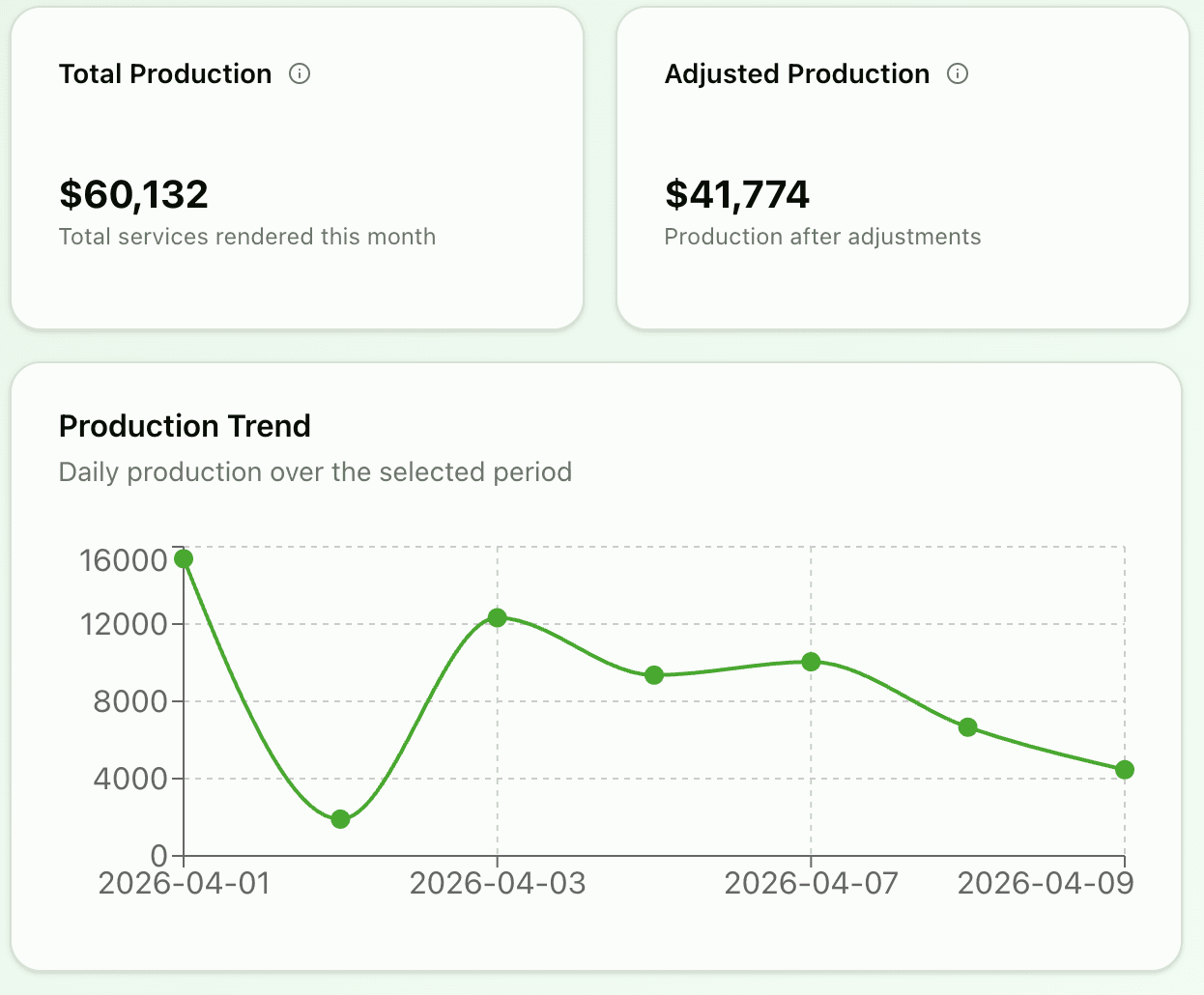
Most Practices Don’t Have a Data Problem. They Have a Clarity Problem.
In the modern dental landscape, every practice owner is told the same thing: "Data is your most valuable asset." Consequently, most dentists invest heavily in robust software stacks. But there is a massive gap between storing data and optimizing a business.
The reality is that most dental practices generate an ocean of information. Production. Collections. New patients. Hygiene. Case acceptance. Scheduling. It’s all there, living inside your systems. The problem is that almost none of it translates into a clear answer to the only question that matters during a busy week:
“What should I optimize next?”
To understand why this question remains unanswered, we have to look at the three layers of dental technology and where most practices get stuck.
Stage 1: The Storage Layer (Open Dental, Dentrix, Eaglesoft)
Every clinic relies on a "system of record." These platforms—Open Dental, Dentrix, or Eaglesoft—serve as the operational backbone. They are the Storage Layer. Think of them like a high-tech digital filing cabinet. They are incredible at administrative execution, managing the schedule, storing clinical notes, and ensuring insurance claims are filed. Without them, you can’t run an office. But you cannot ask your filing cabinet how to grow your business.
The Storage Layer is built for the past. It tells you what happened, but it has no opinion on what should happen next. It is a repository, not a strategist.
Stage 2: The Reporting Layer (PBN, Jarvis, Legacy Analytics)
To solve the "Storage" problem, the industry introduced the Reporting Layer. Tools like Practice by Numbers (PBN) or Jarvis act as translation layers. They take the messy, fragmented data from your PMS and turn it into colorful charts and "speedometers."
But this is where most owners hit a wall: The Dashboard Trap. Dashboards don’t fix practices; decisions do. Reporting layers provide visualization, but they still leave the burden of interpretation on you. You open a dashboard, click through fifteen tabs, scan 100+ KPIs, and walk away with a vague feeling that something is “off.”
By the time you try to find the "why" behind the numbers, you’re pulled back into patient care, staffing fires, and daily operations. Because reporting is passive, you don’t look again until month-end—and by then, you’re performing a post-mortem instead of steering the ship. Reporting tells you that you’re bleeding; it doesn't tell you how to stop the leak.
Stage 3: The Optimization Layer
The real unlock for a dental practice isn’t more reporting. It’s instant clarity.
This is the Optimization Layer. Unlike the reporting layers of the past, Root Data doesn't just show you data and expect you to play data scientist in your spare time. It moves beyond passive charts to active direction.
Clarity means you can open your performance view and immediately see three things:
-
What’s working right now: Where is your momentum?
-
What’s leaking or slipping: Where is the friction?
-
What to optimize next: The single highest-leverage move for your practice today.
Not ten things. Not fifty. One clear focus area, plus the next action to take.
Identifying the High-Leverage Leaks
Every practice has a small number of high-leverage “leaks” that determine whether growth feels predictable or chaotic. PBN and Jarvis will show you a haystack of metrics and expect you to find these needles. Root Data surfaces them automatically.
These leaks are the micro-shifts that determine your bottom line:
-
Patients leaving without scheduling their next hygiene visit.
-
New patients failing to convert into clinical treatment.
-
Money earned but never actually collected.
-
Case acceptance breakdowns where treatment is diagnosed but never completed.
You shouldn't have to stare at 100 KPIs to find these. You need a system that filters out 95% of the noise that doesn't matter, so you can focus on the 5% that actually drives profit.
Optimization as a Consistent Correction
This is what practice optimization actually means. It’s not a giant, once-a-year transformation. It's a consistent, weekly correction. It’s about catching meaningful changes early, turning the data you already have into direction before small issues become six-figure problems.
If you’re running your practice based on monthly reports, you’re always late. Month-end is a post-mortem. Practices are won or lost in the week-to-week decisions that prevent leaks, reinforce wins, and keep the team aligned around a single priority.
The goal is simple: Stop guessing, stop digging, and stop letting profit leak in the background.
From Data to Direction
The difference between a struggling practice and a high-performance engine isn't the amount of data they collect; it's the speed at which they turn that data into action.
Open Dental and Dentrix have already won the battle for storage. PBN and Jarvis won the battle for reporting. But reporting only tells you that you're losing; it doesn't help you win.
If you can look at your performance and know what to optimize next in seconds, you move faster, you waste less effort, and your growth becomes far more predictable. That is the difference between having a dashboard and having Clarity.
Stop Tracking. Start Optimizing.
If you’re tired of "dashboard fatigue" and want to move beyond passive reporting, it’s time for an optimization layer. Explore how Root Data turns your storage layer into a clear roadmap for growth.
[Explore Root Data – The Optimization Layer for High-Performance Dentistry]
Want more insights like this?
Connect your practice management system to Root Data and get clear, actionable insights on your production, collections, and hygiene.
Explore Root Data